
Why Denver Homes Need Better Indoor Air Quality in the Fall
Fall along the Colorado Front Range brings cooler temperatures, changing leaves, and the beginning of heating season. For Denver Metro homeowners, it also means closing the windows, turning on the furnace or heat pump, and spending more time indoors.
That’s why fall is a smart time to think about indoor air quality in your Denver home.
Dust, pollen, pet dander, mold spores, fine particles from wildfire smoke, and other airborne contaminants can enter your home and circulate through your HVAC system. The right whole-home air purifier or advanced HVAC filtration system can help reduce airborne particles and create a cleaner, more comfortable indoor environment.
Cooper Heating & Cooling, your Cooper Green Team, provides whole-home air purification, advanced HVAC filtration, humidity control, ventilation, and other indoor air quality solutions throughout the Denver Metro and Colorado Front Range.
Since 1978, our family- and veteran-owned company has helped Denver-area homeowners improve home comfort with professional HVAC and indoor air quality solutions.
Why Does Indoor Air Quality Matter More During Fall in Denver?
Indoor air quality can become more noticeable during fall because Denver homeowners begin closing their homes and running their heating systems more frequently.
During warmer weather, open doors and windows provide more outdoor-air exchange. As Colorado temperatures drop, homes stay closed longer while furnaces and heat pumps circulate air throughout the house.
At the same time, your home may be dealing with:
- Dust
- Fall pollen
- Pet dander
- Mold spores
- Wildfire smoke particles
- Household odors
- Dry Colorado air
- Other airborne particles
Fall provides a natural opportunity to evaluate your home’s filtration and indoor air quality before winter arrives.
Can Wildfire Smoke Affect Indoor Air Quality in Denver?
Yes. Wildfire smoke can affect indoor air quality in Denver even when fires are located far from the Denver Metro.
Fine particles from wildfire smoke can travel long distances and enter homes through doors, windows, ventilation systems, and openings in a home’s building envelope.
Closing the windows helps, but it doesn’t necessarily keep every smoke particle outside.
The U.S. Environmental Protection Agency recommends high-efficiency HVAC filtration as one strategy for reducing smoke particles indoors. EPA recommends a MERV 13 filter, or the highest-efficiency filter the HVAC system can safely accommodate, during smoky conditions.
That last part is important: not every Denver home’s HVAC system is designed for every high-efficiency filter.
Can Your HVAC System Help Filter Wildfire Smoke?
Yes. A properly configured central HVAC system with appropriate high-efficiency filtration can help reduce fine smoke particles in indoor air.
Your heating and cooling system moves air throughout your home. When that air passes through an effective HVAC filter, it can capture airborne particles before the air continues circulating.
During wildfire smoke events, EPA recommends:
- Using a high-efficiency HVAC filter when compatible with the system
- Choosing MERV 13 or higher when the equipment can accommodate it
- Making sure the filter fits properly
- Checking the filter frequently
- Replacing dirty filters as needed
- Using recirculation settings where appropriate
EPA also notes that portable air cleaners can be used alongside central HVAC filtration for additional filtration in specific rooms.
What Is a Whole-Home Air Purifier?
A whole-home air purifier is an indoor air quality system designed to work with compatible central HVAC equipment to treat air as it circulates throughout the home.
That differs from a portable air purifier, which is generally designed to filter the air in one room or a limited area.
Depending on the equipment, whole-home indoor air quality systems may use:
- High-efficiency filtration
- Media air cleaners
- Activated carbon filtration
- UV‑C technology
- Other air-cleaning technologies
Because different technologies address different concerns, the right solution depends on your home, HVAC equipment, airflow, and indoor air quality goals.
Whole-Home Air Purifier vs. HVAC Filter: What’s the Difference?
An HVAC filter captures particles as air moves through the heating and cooling system. Whole-home air purification is a broader approach that may combine advanced filtration with other air-cleaning technologies.
A standard furnace filter also has an important job: helping protect your HVAC equipment.
Advanced filtration can capture smaller airborne particles, but simply installing the highest-rated filter you can find isn’t necessarily the right solution.
Your HVAC system has to be able to move air effectively through the filter.
That’s why Denver homeowners considering upgraded filtration should look at the HVAC system and the home’s indoor air quality together.
What Does a MERV Rating Mean?
MERV stands for Minimum Efficiency Reporting Value and describes an air filter’s ability to capture particles of different sizes.
In general, a higher MERV rating means greater particle-capturing efficiency.
EPA recommends choosing at least MERV 13 when upgrading filtration, or the highest rating your system fan and filter slot can accommodate.
But a higher rating can also increase airflow resistance.
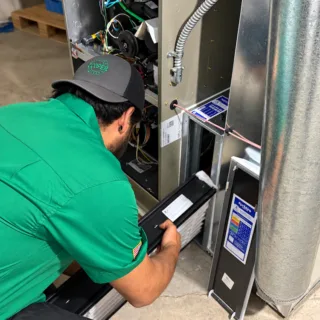
A professional HVAC technician can help determine which filtration options fit your furnace, heat pump, or air handler, rather than assuming one filter works for every home.
Is a Whole-Home Air Purifier Better Than a Portable Air Purifier?
Whole-home and portable air purifiers serve different purposes.
A portable air cleaner provides targeted filtration in a particular room or space.
A whole-home system works with compatible central HVAC equipment and treats air moving through the areas it serves.
For some Denver homeowners, whole-home filtration may provide the coverage they need. Others may benefit from portable filtration in particular rooms. During wildfire smoke events, using central HVAC filtration and appropriately sized portable air cleaners together can also provide additional particle filtration.
The right choice depends on your home and what you’re trying to address.
Can Whole-Home Air Filtration Help With Dust and Pet Dander?
Whole-home filtration can help capture airborne particles such as dust, pollen, and pet dander as air passes through the HVAC system.
If you have pets, notice dust returning shortly after cleaning, or find your HVAC filter becoming dirty quickly, it may be worth evaluating your existing filtration.
Filtration isn’t the only factor. Ductwork, HVAC airflow, ventilation, household activity, and how frequently filters are replaced can all affect the amount of airborne material circulating through a home.
What About Denver’s Dry Fall and Winter Air?
Anyone who has spent a winter in Colorado knows how dry the air can feel.
Particle filtration and humidity control address different indoor air concerns.
As Denver moves into heating season, some homeowners may experience very dry indoor conditions. A whole-home humidifier can work with compatible HVAC equipment to help manage indoor humidity throughout the home.
That’s why a complete indoor air quality evaluation may look beyond air purification alone.
Depending on the home, a solution could involve filtration, purification, humidity control, ventilation, or a combination of approaches.
What Role Does Ventilation Play During Denver’s Colder Months?
When the weather is comfortable, opening windows is an easy way to bring in outdoor air.
That becomes less practical once Denver temperatures drop.
Controlled ventilation systems such as heat recovery ventilators (HRVs) and energy recovery ventilators (ERVs) can provide outdoor-air exchange while recovering some of the energy from outgoing conditioned air.
However, ventilation needs can change when Denver is experiencing wildfire smoke or poor outdoor air quality. During smoke events, reducing the amount of smoky outdoor air entering the home and increasing appropriate filtration can become more important.
This is another reason to consider indoor air quality as a complete system rather than focusing on one product.
Signs Your Denver Home May Benefit From Better Air Filtration
Your home may be worth evaluating if you’re noticing:
- Excessive dust
- HVAC filters getting dirty quickly
- Persistent pet dander
- Stale or stuffy rooms
- Lingering household odors
- Concerns about wildfire smoke
- Seasonal pollen inside the home
- Very dry indoor conditions
- Questions about your current HVAC filter
- Changes in comfort after closing the home for fall
None of these automatically mean you need a whole-home air purifier.
They are good reasons to evaluate your home’s filtration, ventilation, humidity, ductwork, and HVAC system to determine what’s actually contributing to the problem.
Why Fall Is the Right Time to Evaluate Your Denver Home’s Air
Fall is a smart time for Denver Metro homeowners to evaluate indoor air quality because it comes just before months of increased heating and indoor living.
Before colder weather settles in, consider:
- Checking your HVAC filter
- Replacing dirty filters
- Evaluating your current filter efficiency
- Making sure the filter fits correctly
- Considering whole-home air purification
- Addressing dry indoor air
- Evaluating ventilation
- Checking ductwork and airflow
- Preparing your HVAC system for future smoke events
Preparing now can help you understand how your home will handle Denver’s heating season before winter arrives.
What Indoor Air Quality Solutions Does Cooper Green Team Offer?
Cooper Heating & Cooling provides whole-home indoor air quality services throughout Denver, Aurora, Lakewood, Arvada, Westminster, Thornton, Centennial, Broomfield, Boulder, Longmont, Castle Rock, and surrounding Denver Metro and Front Range communities.
Depending on your home’s HVAC system and indoor air concerns, Cooper Green Team can help with:
Whole-Home Air Purification
Whole-home air purification systems work with compatible HVAC equipment to treat air as it circulates through your home.
Advanced HVAC Filtration
Higher-efficiency filtration can help capture smaller airborne particles when properly matched to your HVAC system and airflow requirements.
UV Air Purification
UV‑C equipment can be incorporated into certain compatible HVAC systems as one part of a broader indoor air quality strategy.
Whole-Home Humidity Control
Whole-home humidifiers and dehumidifiers can help manage indoor moisture and comfort as Colorado’s seasons change.
HRV and ERV Ventilation
Heat recovery and energy recovery ventilators provide controlled air exchange while recovering some of the energy from conditioned air leaving the home.
Ductwork and Airflow Solutions
Your duct system moves conditioned air throughout your home. Duct repair, sealing, cleaning, and airflow improvements may therefore be part of a broader indoor air quality solution.
Choosing the Right Air Quality Solution for Your Denver Home
No single air purifier or HVAC filter fits every Denver home.
An older home in central Denver can have very different HVAC, ductwork, filtration, and ventilation needs than a newer home in Broomfield, Castle Rock, or the surrounding suburbs.
Homes with pets may have different concerns than homes primarily focused on wildfire smoke. A homeowner dealing with dry winter air may need a different solution than someone trying to improve particle filtration.
That’s why the best place to start is with the home itself.
The Cooper Green Team evaluates your existing HVAC equipment, airflow, filtration, and indoor air concerns before recommending solutions.
Breathe Better at Home This Fall
Fall doesn’t last long in Colorado.
Before winter arrives and you close up your home for the season, take a closer look at the air circulating through it.
Cooper Heating & Cooling, your Cooper Green Team, has served Denver-area homeowners since 1978. Our experienced team provides whole-home air purification, advanced HVAC filtration, humidity control, ventilation, ductwork, and other indoor air quality solutions throughout the Denver Metro and Colorado Front Range.
Fall Is the Time to Think About the Air Inside Your Home
As Denver temperatures drop, windows close and heating systems start running more often. Whole-home air purification and advanced HVAC filtration can help reduce airborne dust, pollen, pet dander, and wildfire smoke particles as air circulates through your home.
Breathe cleaner. Live more comfortably. Be ready for the season ahead.
Schedule a free in-home indoor air quality estimate with the Cooper Green Team.
Denver Whole-Home Air Purifier & Indoor Air Quality FAQs
Not every Denver home needs a whole-home air purifier. The right solution depends on the home's HVAC equipment, current filtration, pets, ventilation, humidity, outdoor air conditions, and the specific concern you're trying to address. An indoor air quality evaluation can help determine whether upgraded filtration, purification, humidity control, or ventilation makes sense.
High-efficiency air filtration can help reduce fine airborne particles associated with wildfire smoke. EPA recommends MERV 13 or higher HVAC filtration when the system can safely accommodate it. Portable air cleaners appropriately sized for individual rooms can also provide additional filtration during smoky conditions.
No single MERV rating fits every Denver home. EPA recommends MERV 13 or higher when the HVAC system can accommodate it. The correct filter depends on your HVAC equipment, filter housing, airflow, and filtration goals. A qualified HVAC technician can determine which options fit your system.
Not necessarily. Your furnace or air handler needs to maintain adequate airflow through the filter. Filter dimensions and housing also matter. If you're unsure what it can accommodate, have an HVAC professional evaluate your system before substantially increasing filtration efficiency.
Whole-home air filtration can help capture airborne pet dander as air passes through the HVAC system. Effectiveness depends on the filtration equipment, HVAC airflow, maintenance, and indoor conditions.
Air filtration captures particles as air passes through a filter. Air purification is a broader category that may combine filtration with other air-cleaning technologies. The right solution depends on the home's HVAC system and the indoor air concerns you're addressing.
No single replacement schedule applies to every home. Filter type, HVAC runtime, pets, remodeling, household conditions, and wildfire smoke can affect how quickly a filter becomes dirty. Check filters regularly and follow manufacturer recommendations. During heavy wildfire smoke, you may need to inspect and replace filters more often.
Fall is an ideal time to evaluate indoor air quality in Denver because the heating season is beginning and homes are being closed for colder weather. Also consider an evaluation if you're experiencing excessive dust, persistent odors, dry indoor air, filters that get dirty quickly, or concerns about wildfire smoke and airborne particles.